Panasonic Lumix S9 in everyday use – image quality, video & clear recommendation?
I bought the Lumix S5 IIx as a complement to my Lumix S5, primarily for its video capabilities. And now all of that is gone?
Introduction
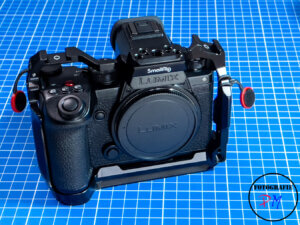
The Lumix S5 is still a good full-frame camera, even if the autofocus, especially in video, sometimes leaves something to be desired. Even after learning to work around it, you notice the difference when a Lumix S5 II(x) is used for the same scene.
Originally, I wanted to keep the Lumix S5 as a second camera, whether for B-rolling or for photography, where both bodies are virtually identical. But then the Lumix S9 came out, and everything changed.
I recorded a video about my experiences with the Lumix S9:
The Lumix S9 as a compact Lumix S5 II(x)
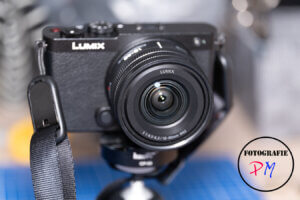
When the camera was released, it received some scathing criticism, mainly due to the lack of a viewfinder and the fact that it doesn’t have a mechanical shutter. At that time, there wasn’t a suitable kit available, and a Lumix S9 with the 20-60mm lens attached looked rather unusual.
But the camera’s dimensions, combined with the fact that it used the same sensor, were quite appealing. The Opengate video option was also enticing.
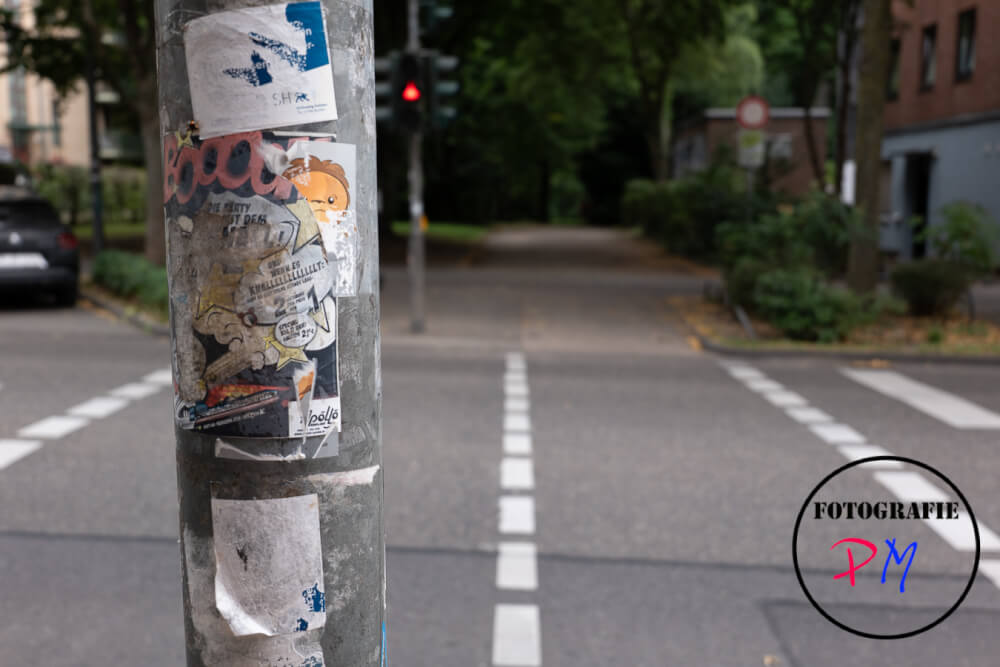
Then the 18-40mm kit lens was released, and Panasonic lowered the camera’s price accordingly, offering a 5-year warranty option for the S series. For just under €1,400 with the kit, I bought it.
The Two Drawbacks
Let’s talk about the camera’s two drawbacks. Firstly, the camera no longer has a mechanical shutter, which can lead to rolling shutter banding and other issues in certain situations. Since my photography focuses on landscapes, architecture, close-ups, and macro shots, this shouldn’t bother me too much.

The other issue is the lack of a viewfinder. You’re essentially shooting with a smartphone, which can be problematic in bright sunlight. Adjusting the monitor’s brightness only helps to a limited extent. It also takes some getting used to, as I often found myself wanting to hold the camera up to my eye, as if there were a viewfinder.
But I can live with both limitations quite well, especially the lack of a mechanical shutter.
The SmallRig Grip
The camera is so compact that it can sometimes be difficult to hold. This is especially true with a larger and heavier lens. Therefore, almost everyone recommends an additional grip. I got the one from SmallRig and I’m getting along well with it.
The 18-40mm Kit Lens
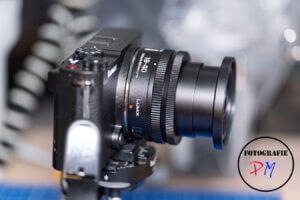
While you often expect lower quality from kit lenses compared to more expensive ones, the 18-40mm is a real no-brainer. First, its size is a perfect match for the camera, and the optical quality is quite good, comparable to the 20-60mm lens on the Lumix S5.
As a rule, the aperture—or perhaps we should say, the low aperture—is sufficient. Only in a few churches, for example, did I use the more suitable Sigma 16-28/2.8 while on vacation. Even then, the ISO sometimes went up to 6400, which can be easily managed with some noise reduction in Lightroom.
So, I sometimes only took the Lumix S9 with me and left the Lumix S5 IIx at my accommodation, and I didn’t regret it.
65:24 aspect ratio—a novelty?
In some videos, I’ve heard that people like to use the Lumix S9 because the camera offers a 65:24 aspect ratio, which apparently works very well with a 24mm lens.
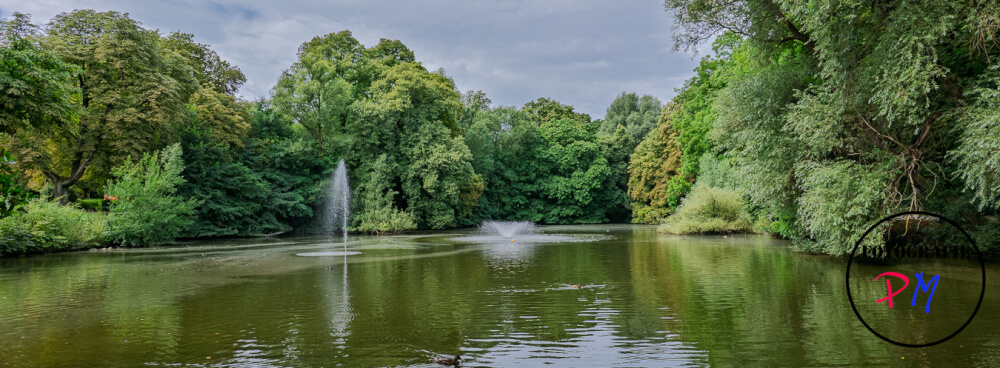
This format certainly has its appeal, especially in black and white, but it’s definitely not new. This format was already available on the Lumix S5. However, it’s neither new nor new, and you can also adjust the aspect ratio later in Lightroom.
When shooting in RAW, it’s only displayed in this panorama format on the viewfinder; the original 3:2 aspect ratio is retained. And the Lumix app seems to have a problem with it, as some JPEG photos appear blurry, even though Panasonic claims this format is designed for quick sharing.
The Lumix Lab app
This app has been praised in some quarters because it allows you to edit photos and videos and then share them directly on social media. I’ve also tried it with the Lumix S5 IIx, but it only works for the MP4 format and, in the photo section, for the JPEG format.
When applying LUTs, you have to make sure that the underlying image style matches the LUT’s base style, otherwise you might get undesirable results. So, if the LUT’s base style is VLOG, you should also use that style for your photos/videos.
Although the transfer speed is acceptable, at least for JPEG files, it’s not really for me. Besides, I always take photos. I still prefer shooting in RAW format, and the app can’t handle that.
Where the app disappointed me was with the geotagging of the images. Many of my pictures didn’t contain GPS data afterward, even though the GPS indicator was brightly lit on the screen and the smartphone was in my backpack or bag. Fortunately, I record the GPS data with a separate app, so I can also do the tagging in Lightroom.
Conclusion
Despite its limitations, the Lumix is a great full-frame camera for the price and, for me, primarily a very suitable addition to my Lumix S5 IIx.
ciao tuxoche


